Jasyl
AI monitoring of Kostanay's urban trees
Problem
The tree register is kept on paper and in scattered spreadsheets. A dangerous tree makes it into the work plan only after a branch has already come down.
Solution
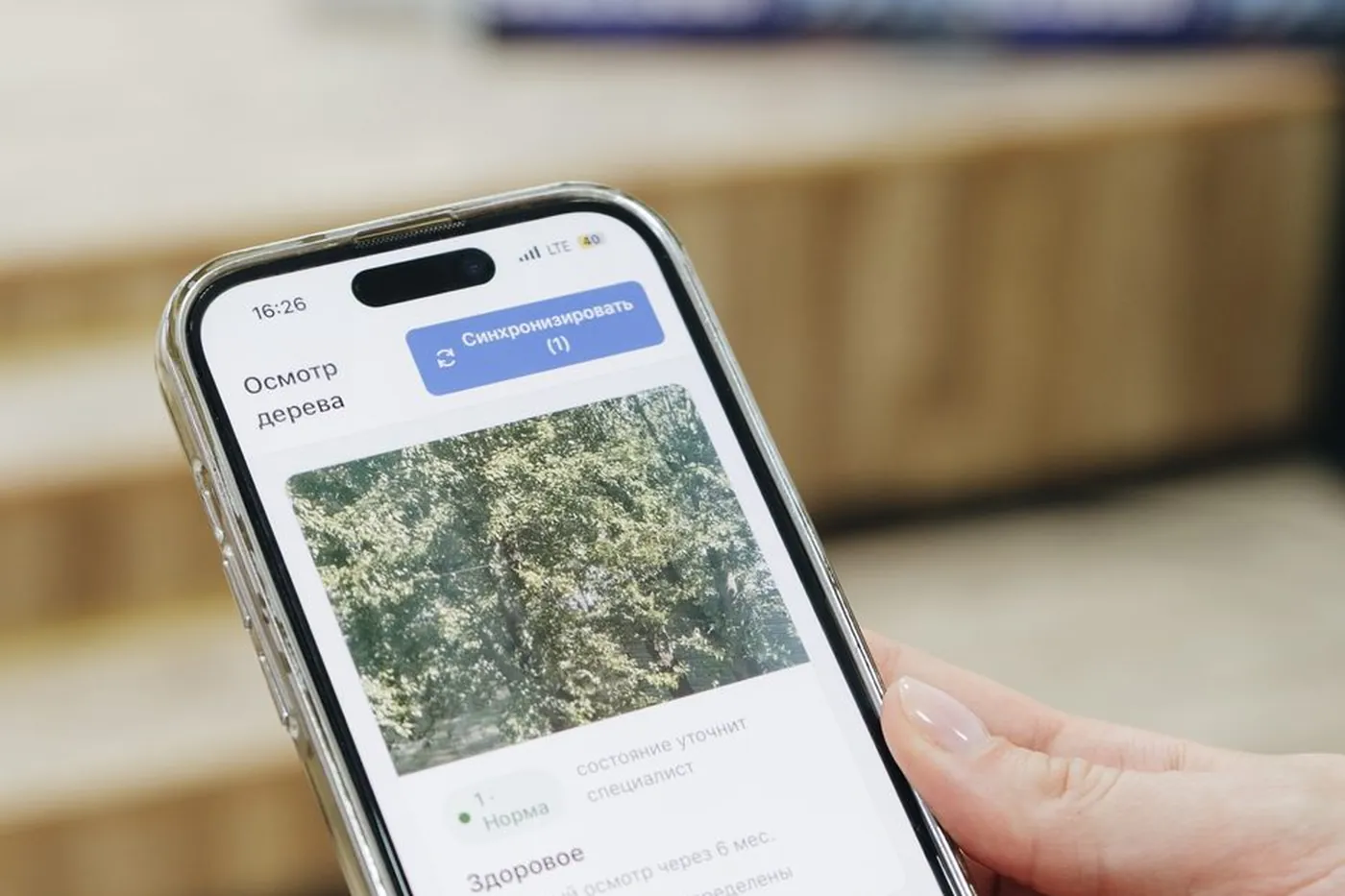
A resident photographs a tree, the model classifies its condition, the object lands on the city map with an inventory number, and the parks service receives a prioritised job. The app works offline: photos queue on the device and upload themselves once the connection returns.
Engineering decisions
- Permissions live in Postgres Row Level Security policies, not in hidden buttons. Nobody has a DELETE policy: a municipal register must not lose records on a click.
- Every record gets a client_uid on the device, and sync upserts by it — resending never produces duplicates.
- After the hackathon the same model moved into the browser via ONNX Runtime Web: the demo runs with no server and no cold start, the register uses a bundled demo dataset, and the app labels that plainly.
What went wrong
- 55% accuracy is an MVP, not production. The model catches the dangerous classes confidently (hazardous branches: precision 0.88) but confuses healthy with diseased. So a human confirms the verdict, not the machine.
- Background Sync doesn't work in Safari, so sync needed three independent triggers, one of them manual.
- The model deliberately does not identify the species: on our volume of data that can't be done reliably from a photo, and a wrong species in a municipal register is worse than an empty field.
Result
The whole loop is closed: our own dataset, a fine-tuned MobileNetV3-Large, an app with an offline queue, the map, a digital passport per object and an export for the city administration. Median model confidence is 0.93 on correct answers against 0.68 on wrong ones — low confidence flags an object as needing a specialist on its own.
What I'd do differently
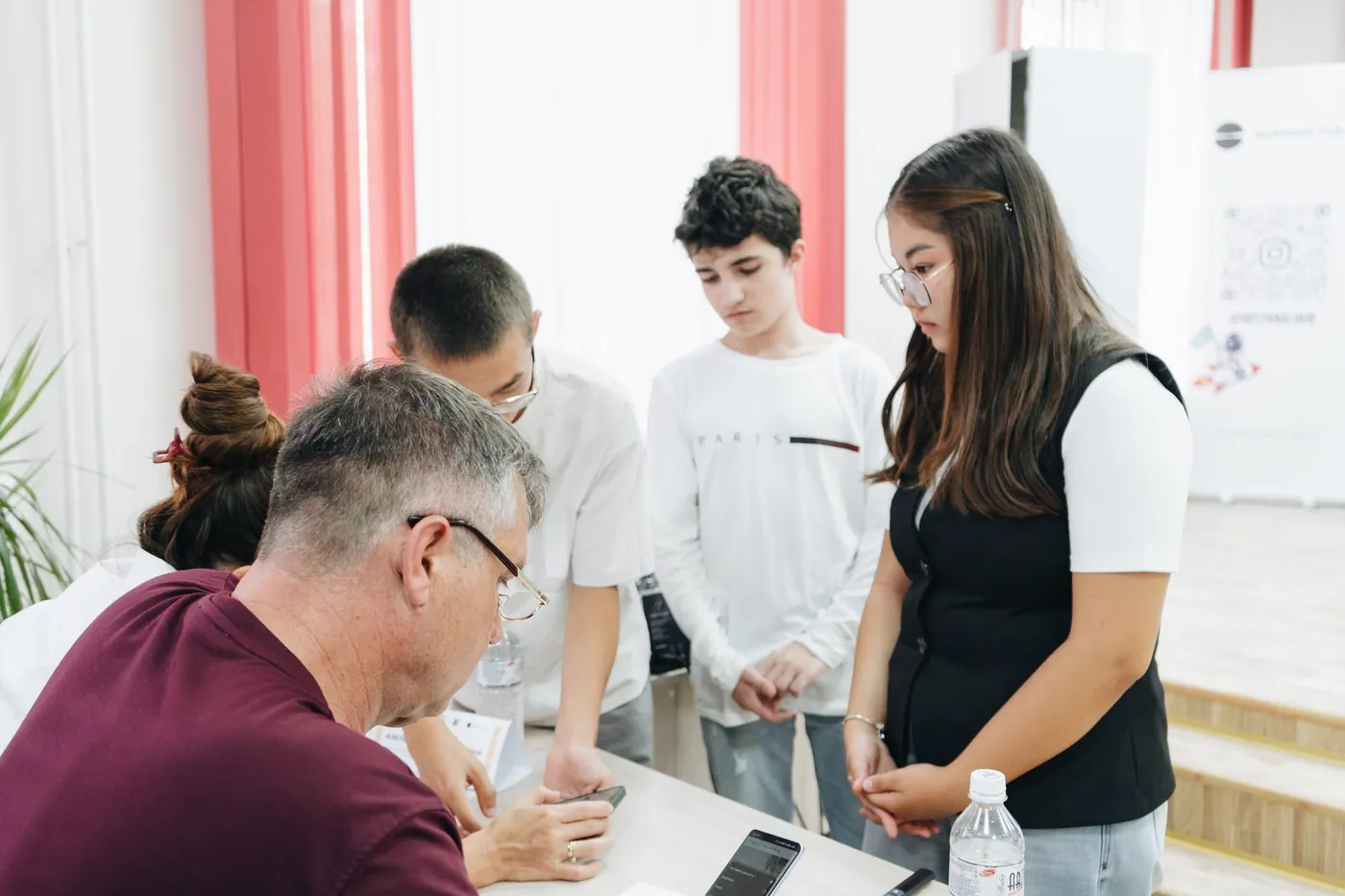
The questions from the jury and mentors weren't about architecture but about who exactly presses which button and when — and half our answers only surfaced on stage. Next time the user's path gets worked out before the pitch, not during it.
How it went
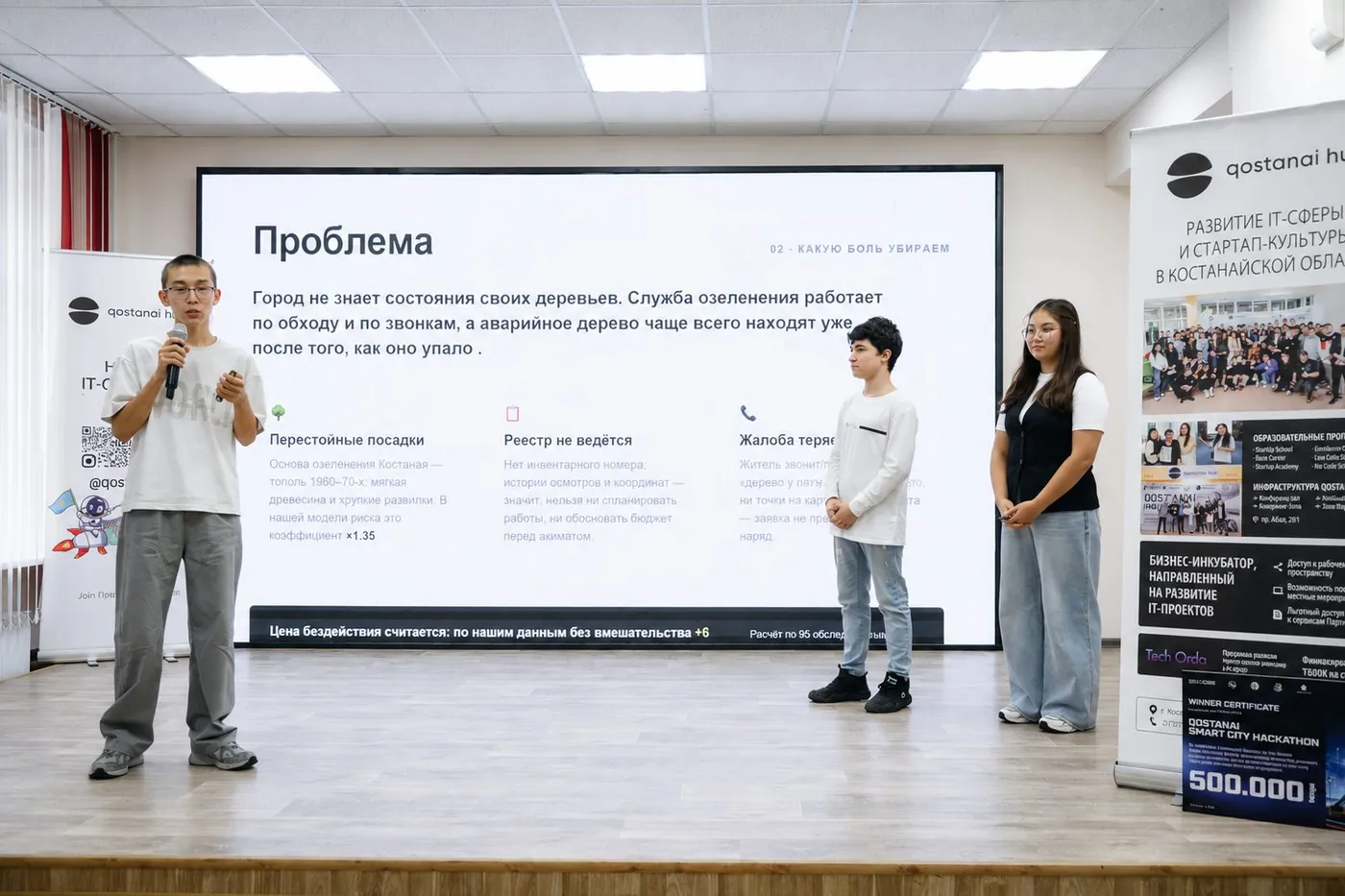
Qostanai Smart City Hackathon, 13–14 August 2026, case No. 1 — an intelligent monitoring system for urban greenery. Two days in the hall, a night spent debugging sync, a morning rebuilding the deck, then the pitch in front of the jury, mentors and the other teams. The team: three people and two laptops, School-Lyceum No. 1, Kostanay.
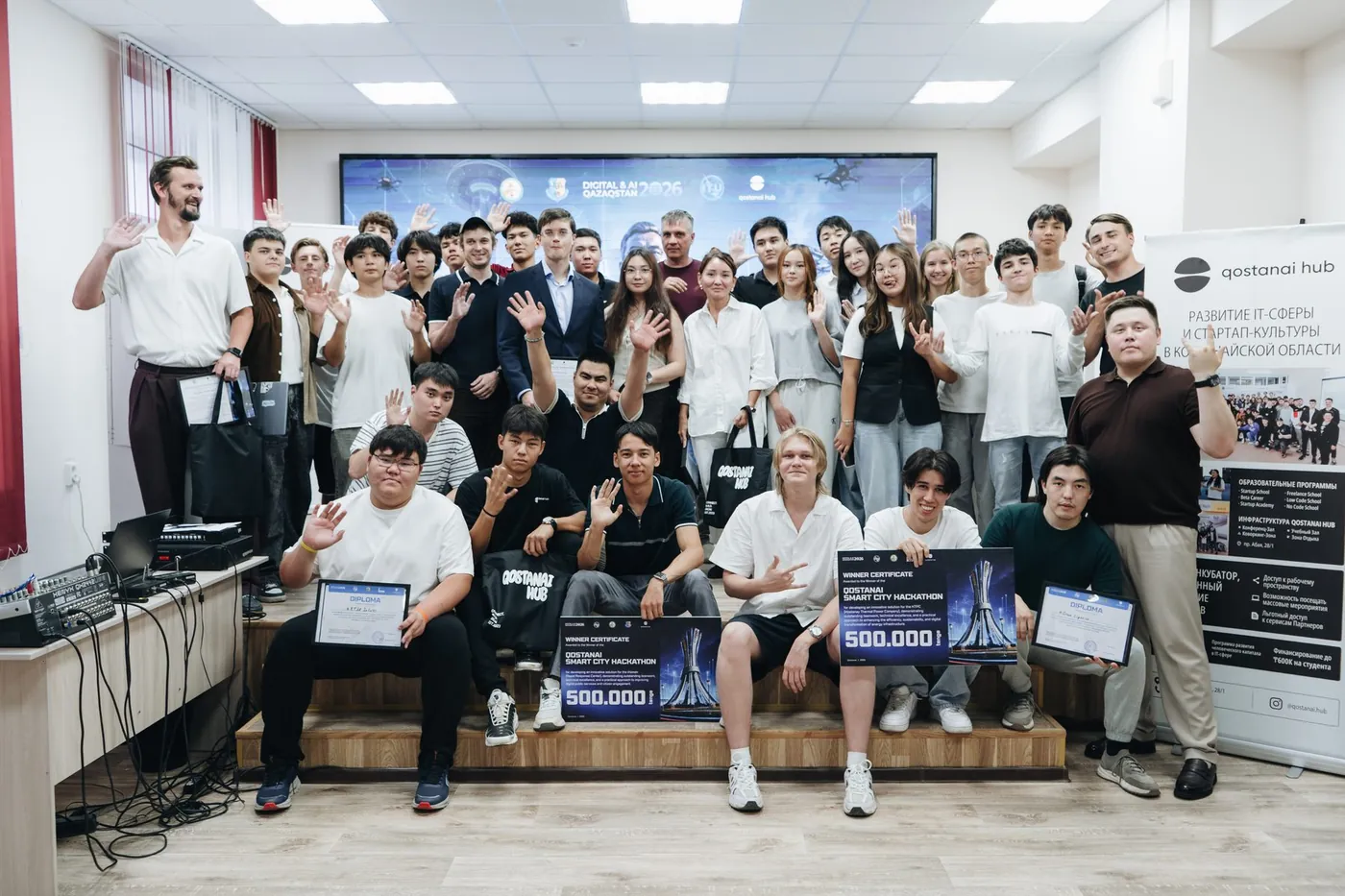
Certificate
Issued to the team, not to a person: the certificate carries the team name, Jasyl. Signed by the ITU regional director for the CIS and the director of the Kostanay branch of the Astana Hub foundation.