AgroVision AI
A weed map and spot-spraying plan from drone imagery
Problem
An average field in the region is 400 hectares, weeds are spread unevenly across it, and herbicide goes on everywhere at the dose for the worst patch. Crop protection is the single biggest cost line, and no agronomist can walk 400 hectares. Olzha Agro had its own light drone, a season of unlabelled field imagery, and weed photos labelled by an agronomist by species and growth stage.
Solution
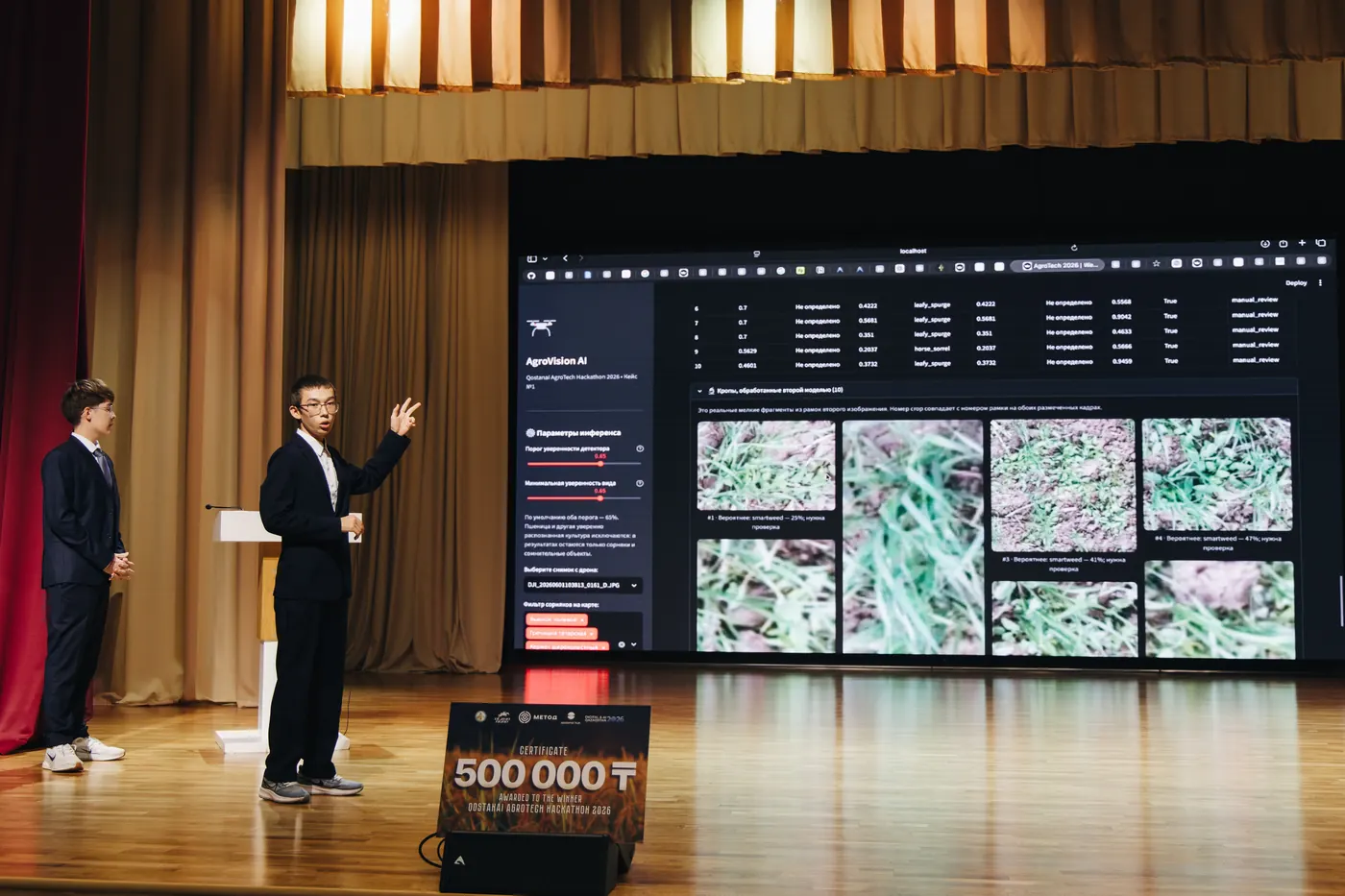
A drone image is cut into tiles, a detector separates crop from weed, a classifier identifies species and stage, and then the mentor agronomist's rules apply: damage thresholds and a dose adjusted for stage. Every finding gets its own coordinate, treatment zones are built around the patches, and the output is a task file for the sprayer's terminal. Where the model isn't sure, the object goes to the agronomist's offline app, not under a nozzle.
Engineering decisions
- Two stages instead of one network: YOLOv8s finds crop vs weed, and an EfficientNet-B0 with two heads identifies the species (26 classes from the case's reference list) and the stage. IoM box merging removes the "nesting doll" effect, where fifty nested boxes land on one plant.
- One manual-review threshold for the whole project (0.75), in one config. Below it an object cannot be assigned "spray" — only "check". The agronomist's decisions are stored and feed fine-tuning, but a new model never replaces the working one automatically.
- Each weed is georeferenced from EXIF, not the frame as a whole; export goes to GeoJSON, Shapefile and ISO 11783-10 TASKDATA — the format sprayer terminals read.
What went wrong
- 98% on the agronomist's reference photos and real drone frames are different things. On small drone crops the median species confidence is 0.49, and 454 of 711 objects went to manual review. That's exactly why the pipeline has a human step.
- The ISO 11783-10 export is structurally valid but hasn't been tested on a single real terminal. "Straight into John Deere" would have been a promise we never checked.
- The first version of the README carried two economic figures that contradicted each other. A post-event metrics audit caught it: the economics are now given as a formula and a scenario, not as a measured fact.
Result
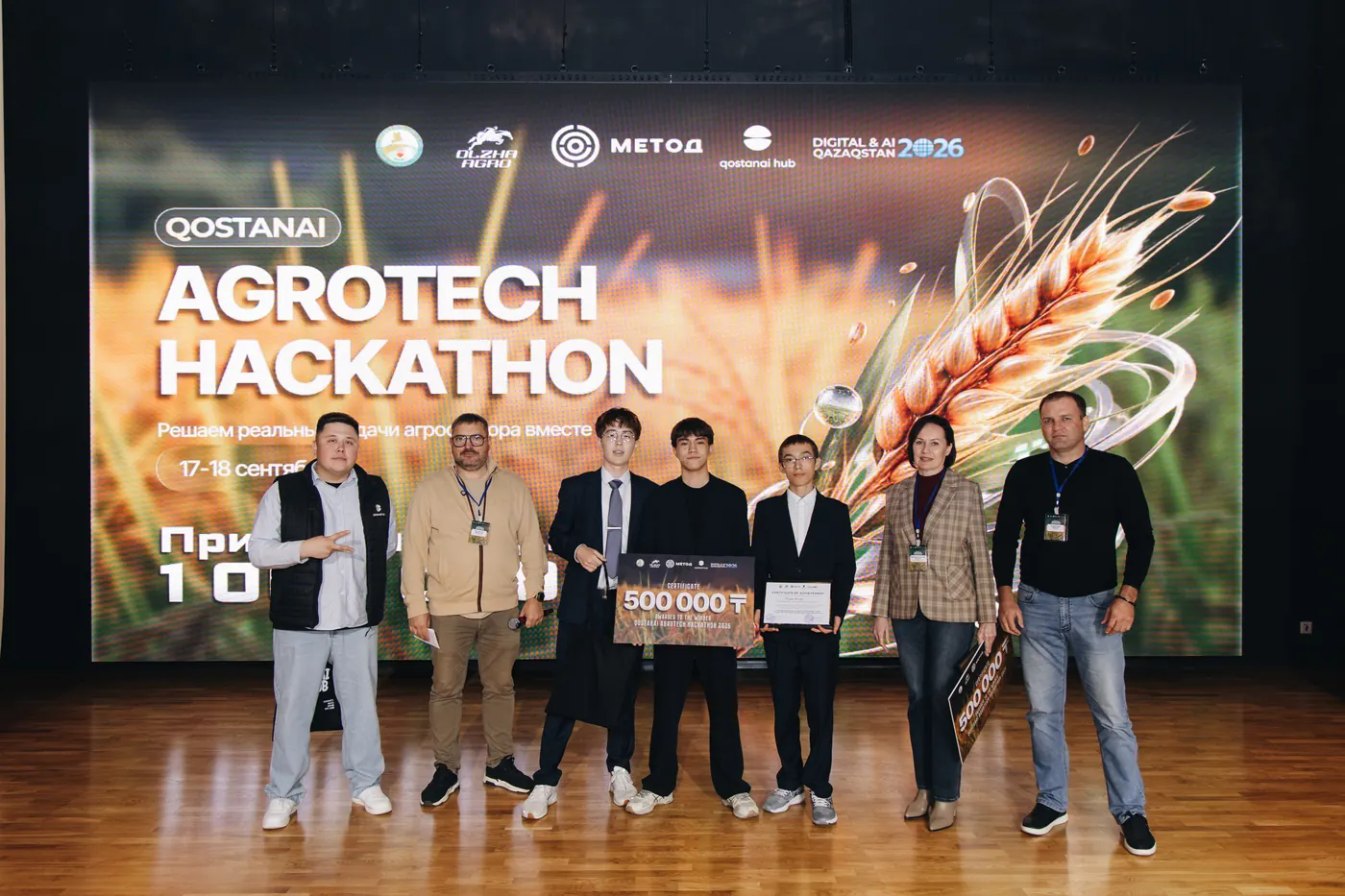
First place on case No. 1 and a 500,000 ₸ prize. After the event the jury asked us to tidy the project up and publish it — we rewrote the README on verified figures, with a "what we claimed / what the audit showed" table, and got the test suite green: 125 passing.
What I'd do differently
First, a labelled set of real drone crops — the flattering percentages on studio photos come after. And every figure in the pitch tied to the file it came from before going on stage, not after.
How it went
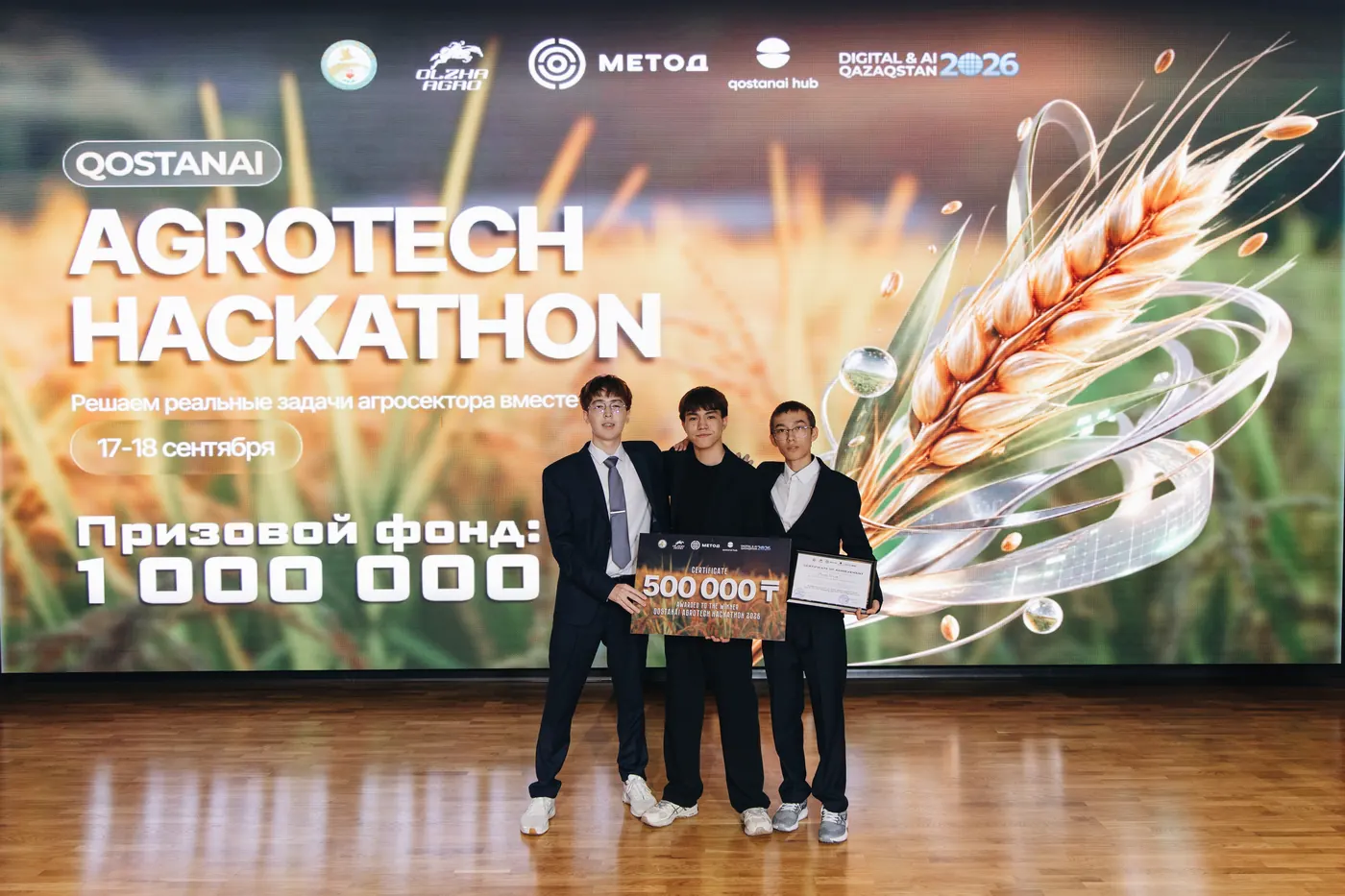
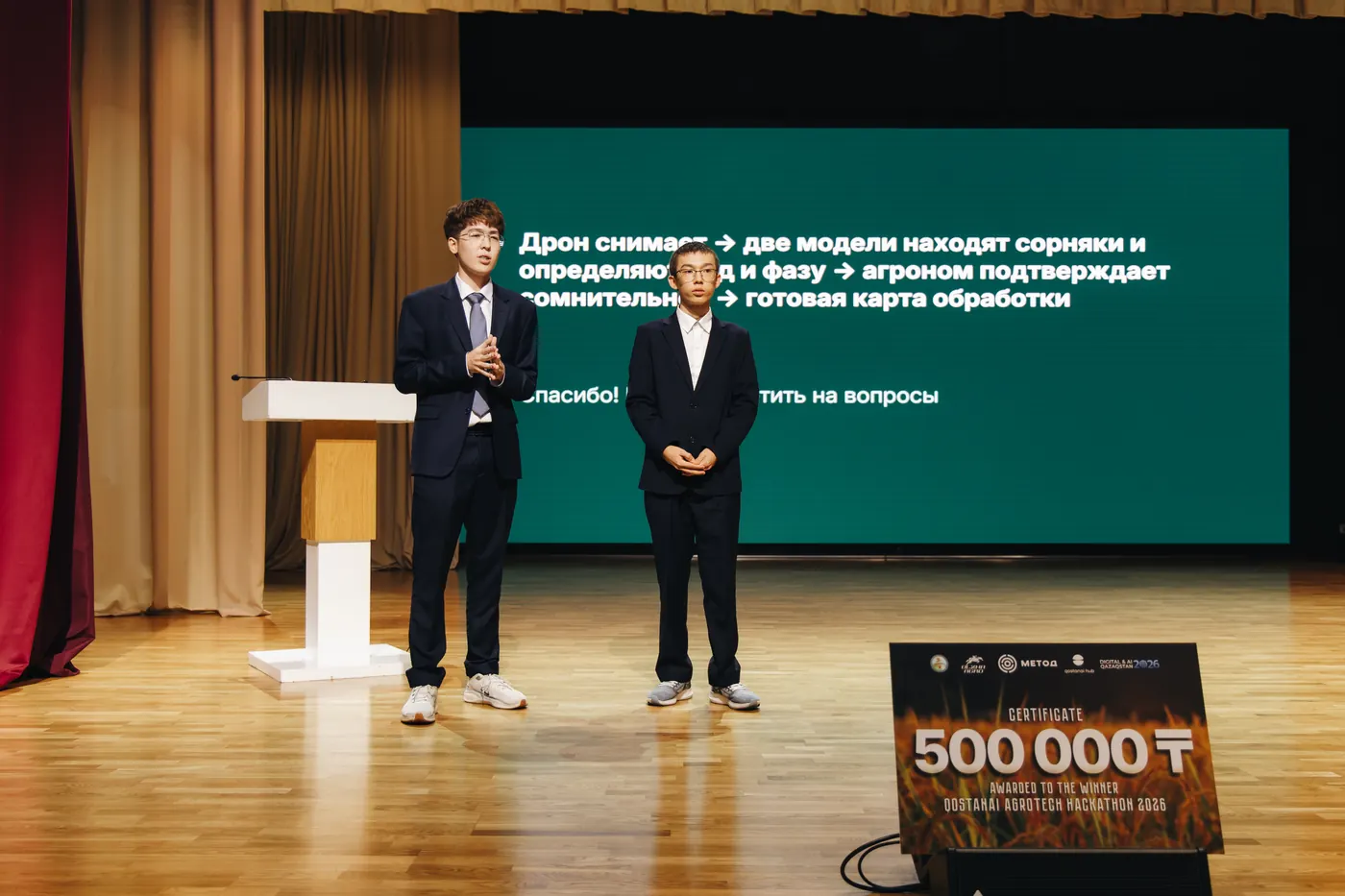
Qostanai AgroTech Hackathon, 17–18 September 2026, Kostanay. Organised by the Kostanay branch of Astana Hub, Method 2023 LLP, the agricultural holding Olzha Agro and Digital & AI Qazaqstan 2026; both cases came from Olzha Agro, with a 1,000,000 ₸ prize fund — 500,000 ₸ per case. The holding's director of digital transformation briefed the case, the day went to work with mentors, and day two was Demo Day: three minutes to pitch and two for the jury's questions. We competed as MusorDropp, a team of three.
Certificates
The winner's certificate: first place on case No. 1 — weed recognition from drone imagery. Issued to the team: it carries the name we competed under, Musor Dropp. Signed by Ye. Bayarchuk, CEO of Method 2023 LLP, and D. Mnaidarov, director of the Kostanay branch of Astana Hub.
The case winner's prize — 500,000 ₸: the hackathon's 1,000,000 ₸ fund was split evenly between the two Olzha Agro cases. This is the board handed over on stage — the same one in the team photo.
The hackathon participation certificate. Also issued to the team, with the same signatures as the winner's certificate.